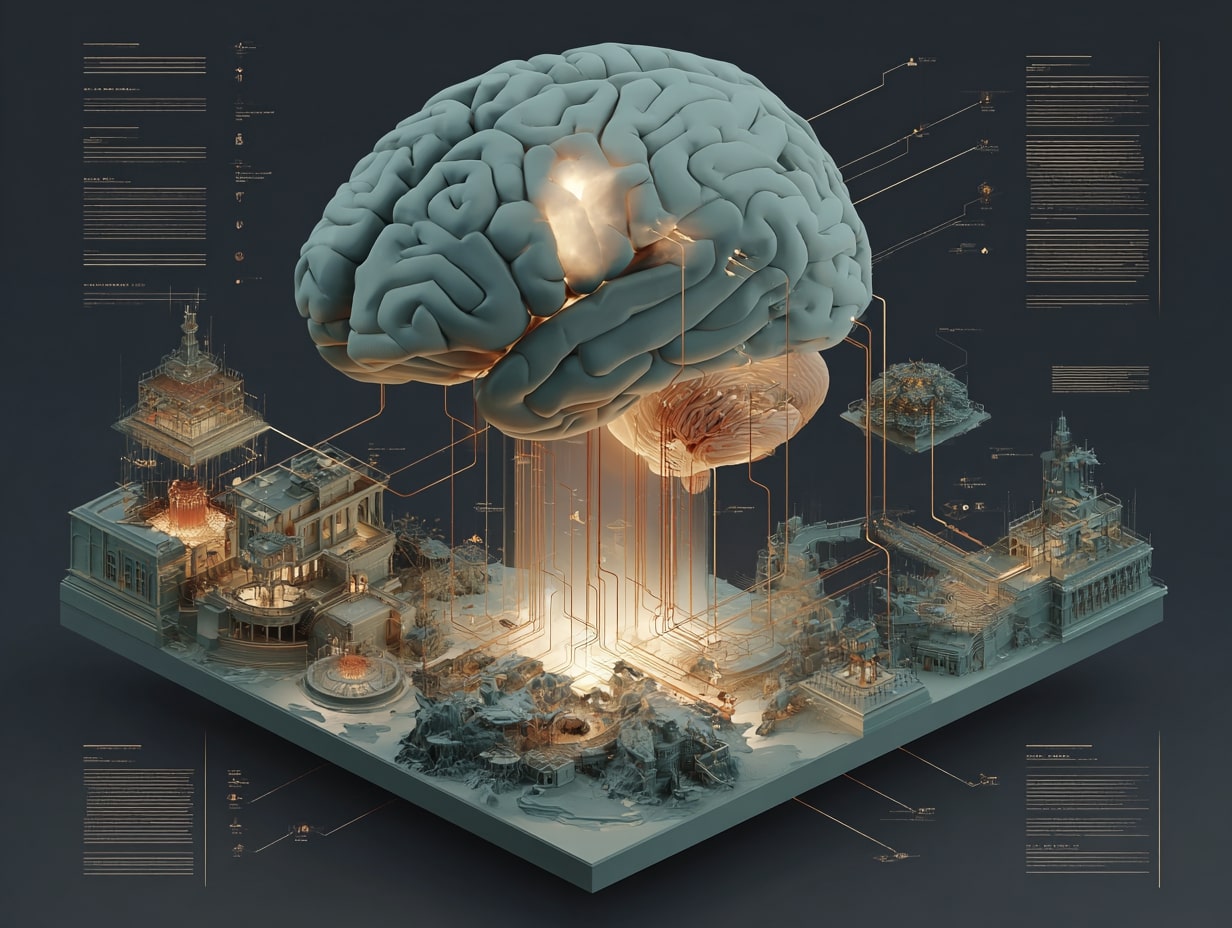
Persistent wikis to make LLMs work over time
A document proposes replacing simple RAG with a wiki maintained by an LLM. The idea aims to compact knowledge, track contradictions, and reduce maintenance work.
The text "LLM Wiki" describes a method for building personal knowledge bases with language models. Published as an idea file, it contrasts classic RAG — where the AI rereads fragments at each question — with a persistent wiki that the LLM enriches over sources. The goal is simple: keep accumulated knowledge instead of reconstructing it at every query.
A wiki that learns not to forget everything
In this approach, the model does not just retrieve relevant passages from raw documents. It reads a source, extracts the essentials, then integrates them into a structured base of interlinked Markdown pages. Contradictions between sources are flagged, summaries are updated, and cross-references are established without waiting for the next question. The result looks less like a one-off search and more like a dossier that strengthens with each addition.
The document emphasizes a fundamental difference with NotebookLM, ChatGPT file uploads, and most RAG systems: here, knowledge is not rediscovered at each use. It is compiled once, then maintained. This can serve personal tracking, research monitoring, book reading, competitive analysis, or an internal team wiki. In short, everything that too often ends up as a pile of very motivated but quickly scattered notes.
Three layers, one working method
The proposed scheme relies on three levels. First, the raw sources: articles, papers, images, or data files considered immutable. Next, the wiki, a directory of Markdown files generated by the LLM, with summaries, entity pages, concept pages, comparisons, and syntheses. Finally, the schema, a guideline document — for example CLAUDE.md or AGENTS.md — that describes the wiki structure and how to feed it.
This organization also aims to frame operations. During ingestion, the model reads a new source, discusses key points with the user, updates the index, revises affected pages, and adds an entry to a log. Conversely, during a query, it starts from the wiki, not raw documents, then produces a response that can itself become a new page. The text also mentions a lint phase, i.e., a health check of the wiki to spot inconsistencies, orphan pages, and obsolete data.
Why this idea can last
The model’s strength is not summarization but maintenance. This is where wikis usually wear out: links break, summaries age, contradictions linger in a corner. Here, the LLM takes on this tedious work, without tiring or forgetting an update. The human keeps control over source curation, questions to ask, and interpretation. The document sums up the division of labor in a neat formula: the human decides, the AI organizes.
The text also relates this idea to Vannevar Bush’s Memex, imagined in 1945 as a personal knowledge space linked by associative paths. The difference, the author notes, is that the LLM can finally ensure the maintenance that this project could not automate. The document remains deliberately abstract: it does not describe a single implementation but a pattern adaptable depending on the domain, tools, and desired automation level.
Key points
- The wiki is maintained by the LLM, not just queried.
- Three layers structure the system: sources, wiki, schema.
- Updates sometimes affect 10 to 15 pages.
- The model cites Vannevar Bush’s Memex, 1945.
- Index.md and log.md track the wiki’s evolution.
- The text also targets Obsidian, qmd, and Marp.
By the numbers
- 10 to 15 pages — possible impact of a single source, according to the text.
- ~100 sources — size where index.md remains effective, according to the author.
- 1945 — year of Vannevar Bush’s Memex cited as reference.
- 3 layers — raw sources, wiki, schema.