Genie 4: Google boosts its real-time interactive worlds
Google presents Genie 4, its interactive world model, in a research preview. The system gains realism, adds native audio, and initially targets trusted testers.
Google DeepMind unveiled Genie 4, its world model capable of generating real-time interactive environments, on October 27, 2026. The company initially reserves it for trusted testers, before a gradual rollout via Project Genie, Google AI Ultra, and the developer tools Gemini API and AI Studio. The challenge goes beyond a technical demo: Google wants to show that a model can simulate a credible world, with sound, characters, and coherent reactions, at least during short sessions.
Un monde qui se construit pendant qu’on le traverse
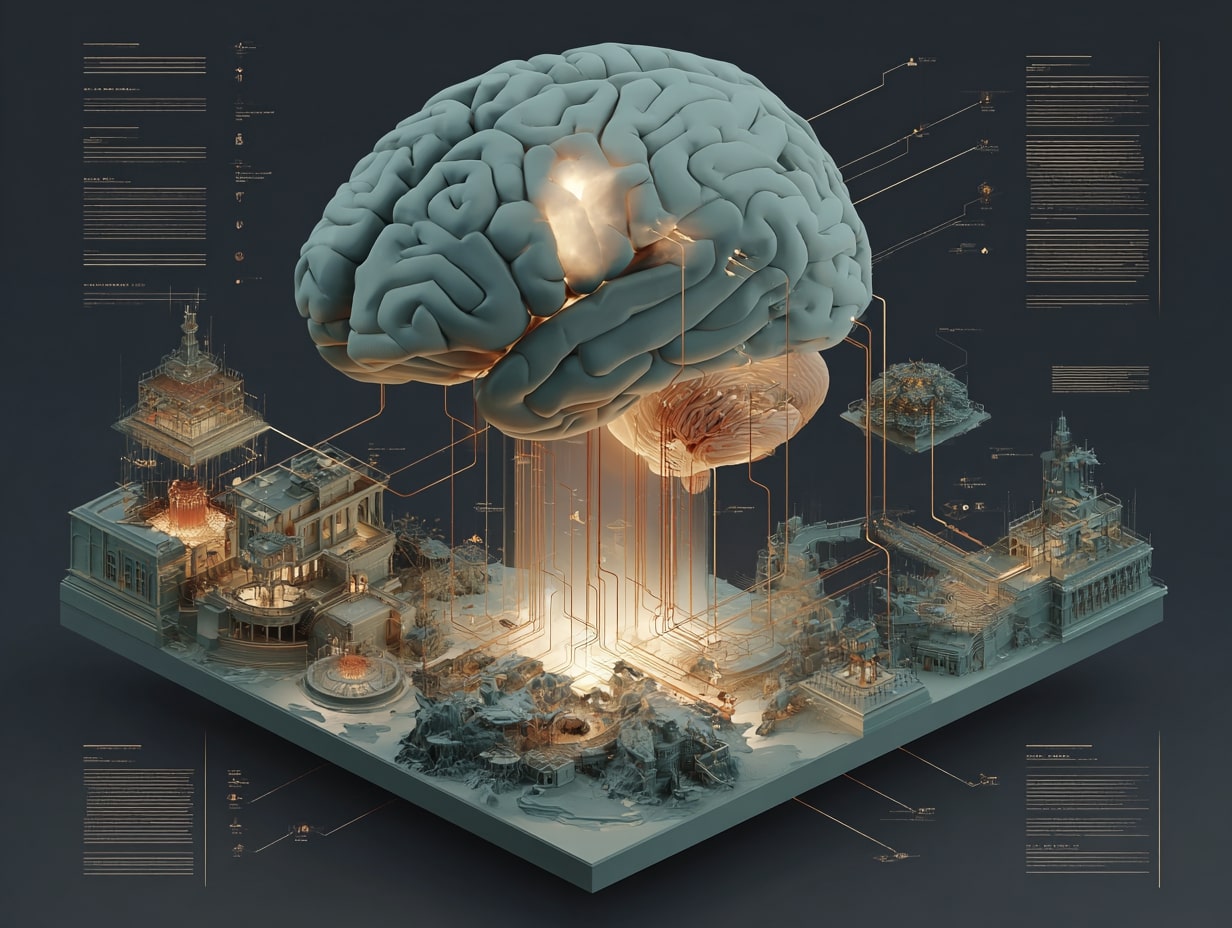
Genie 4 does not produce a fixed video. The model calculates the scene frame by frame, based on the user's movements and natural language instructions, making it closer to a simulation engine than a classic generator. Google says the experience can last about two minutes, compared to one minute for Genie 3, with better scene continuity.
The operation also relies on Gemini 3.8 Flash, used as a control agent to break down objectives, verify steps, and maintain overall coherence. In other words, Gemini monitors the setting while Genie draws the scene. The duo serves to keep readable causality, even when the user changes the weather, adds an object, or moves the camera mid-session.
Pourquoi Google insiste autant sur le réalisme
DeepMind highlights several visible improvements: more credible physics, better-rendered collisions, more natural human behaviors, and improved visual stability. The most sensitive point remains the representation of people, often shaky in this type of model; Google assures that characters now move more fluidly and respond better to the environment.
The clearest novelty lies in native audio. Genie 4 generates ambient sounds, like wind or waves, and can also produce interactive dialogues that adapt to the scenario. DeepMind even says the sounds in the demonstrations were generated directly by the model. For the intended uses, this matters: a game prototype or a film preview becomes immediately more convincing when it does not float in museum silence.
Des usages qui dépassent le jeu vidéo
Google presents Genie 4 as a useful tool for film previsualization, game idea prototyping, and training scenario creation for robots. In tests conducted with partners, the company also mentions applications in journalism, education, engineering, and the creative industry. Teams can explore a scene, modify lighting, test multiple takes, or simulate a historical situation from a simple 2D image.
DeepMind also links Genie 4 to its work on robotics and the Gemini models. The idea, according to the company, is to combine the logical planning of reasoning models with pixel-by-pixel simulation of a living environment. It is the very serious version of “what if we pretended, but well,” with a clear goal: training agents and robots in simulated worlds rather than in text alone.
Limites, accès et surveillance
Genie 4 remains an experimental model. Google warns that visual details and object permanence may drift over sessions, especially when the user multiplies changes or extends the simulation too long. Research also continues on complex physical interactions, real-time sound accuracy, readable text, and long-term coherence.
Access will follow a multi-step path. The model is first open to selected testers, then should arrive “soon” for Google AI Ultra subscribers in Project Genie, before availability for certain partners via Gemini API and Google AI Studio. Google also specifies that all video and audio content generated by Genie 4 will include SynthID, its invisible watermark to identify AI-produced content.
Key points
- Genie 4 was announced on October 27, 2026.
- Google mentions about two minutes of coherence, compared to one minute for Genie 3.
- Gemini 3.8 Flash controls the simulation in the background.
- The model adds native audio and interactive dialogues.
- Access initially reserved for trusted testers and Google AI Ultra.
- SynthID will mark generated videos and sounds.
By the numbers
- 2 minutes — targeted coherence duration for Genie 4, according to Google, October 2026.
- 1 minute — announced duration for Genie 3, according to Google, August 2025.
- 24 frames per second — navigation rate cited for Genie 3 in the limited preview.
- 100 dollars per month — starting price of Google AI Ultra mentioned for public access.