A structured and observable jobs mode
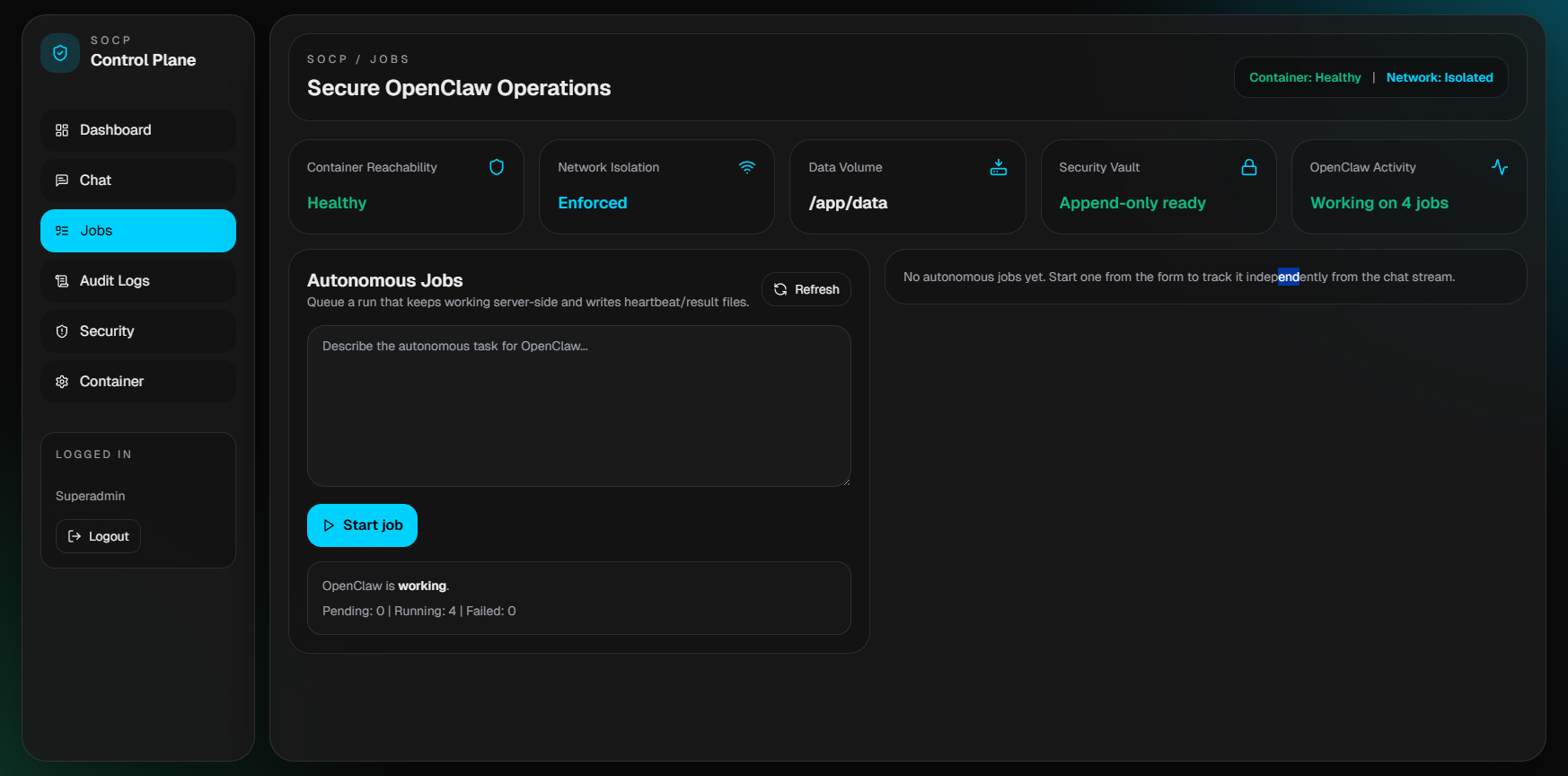
fluidOpenClaw introduces a jobs mode that allows tracking the complete lifecycle of a task, from its triggering to the production of the deliverable. Unlike a one-time command-line execution, each process is persistent, identifiable, and consultable over time.
This operation enables users to visualize progress status, execution steps, and any errors. Jobs produce their own artifacts and can be replayed or completed, facilitating iterative work and simultaneous management of multiple requests.
Controlled deliverable production
fluidOpenClaw allows transforming the results generated by the agent into deliverables accessible locally or on the internet with a dedicated URL. This approach ensures better readability and direct exploitation of the produced results.
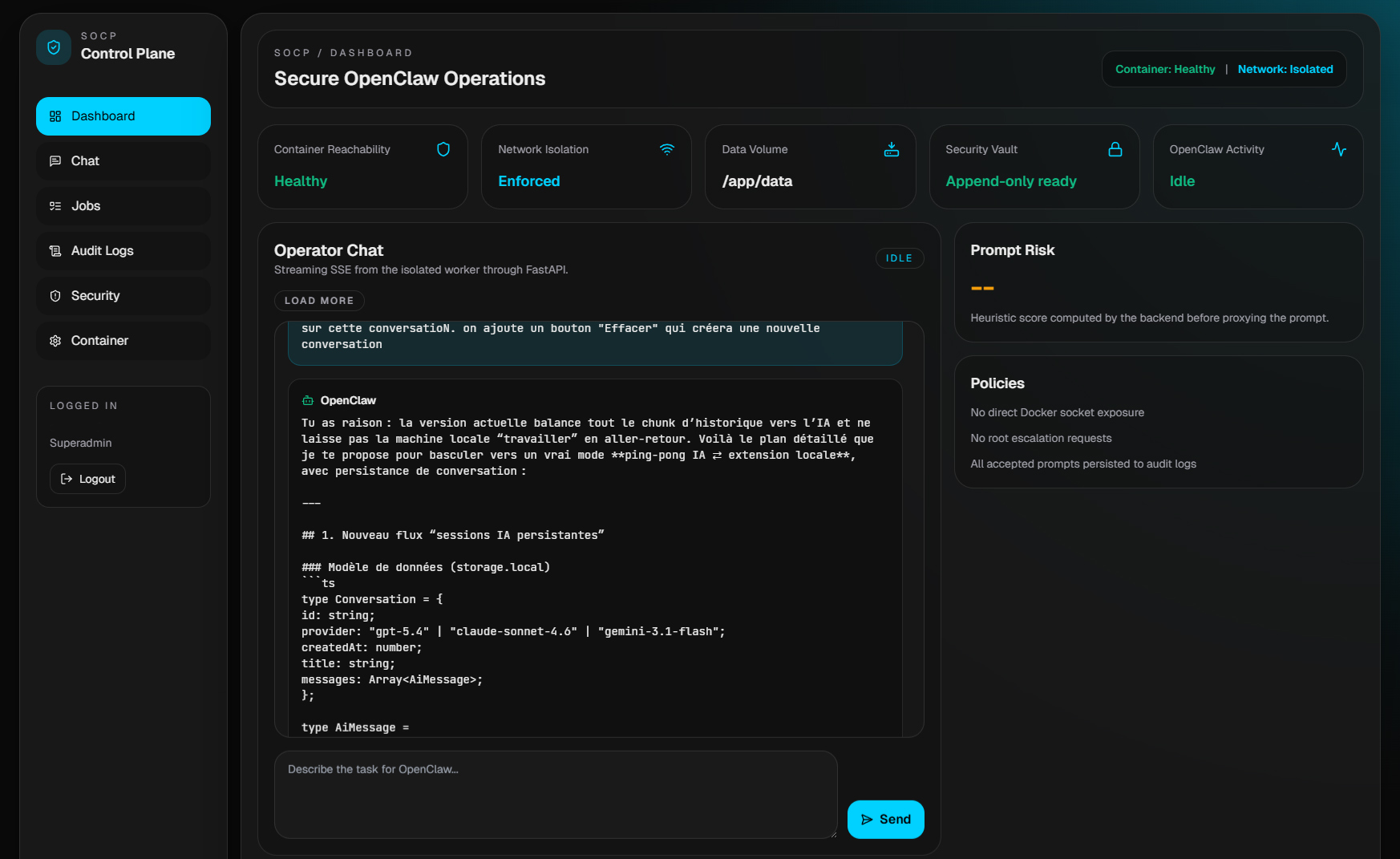
Interactions can be managed via a web interface or by email, with continuous tracking of requests. This combination frees users from exclusively technical command-line usage while maintaining precise control over the generated outputs.
A technical stack suited for controlled use
fluidOpenClaw is built on a modern stack designed to support operational uses. The frontend relies on React, TypeScript, Vite, and Tailwind CSS, offering a fast and structured interface. The backend uses Python with FastAPI and SQLAlchemy, enabling robust data and process management.
The whole system is orchestrated via Docker, with separation of services and environments. This architecture facilitates deployment, maintenance, and integration into existing infrastructures while maintaining clear component isolation.
A control layer around OpenClaw
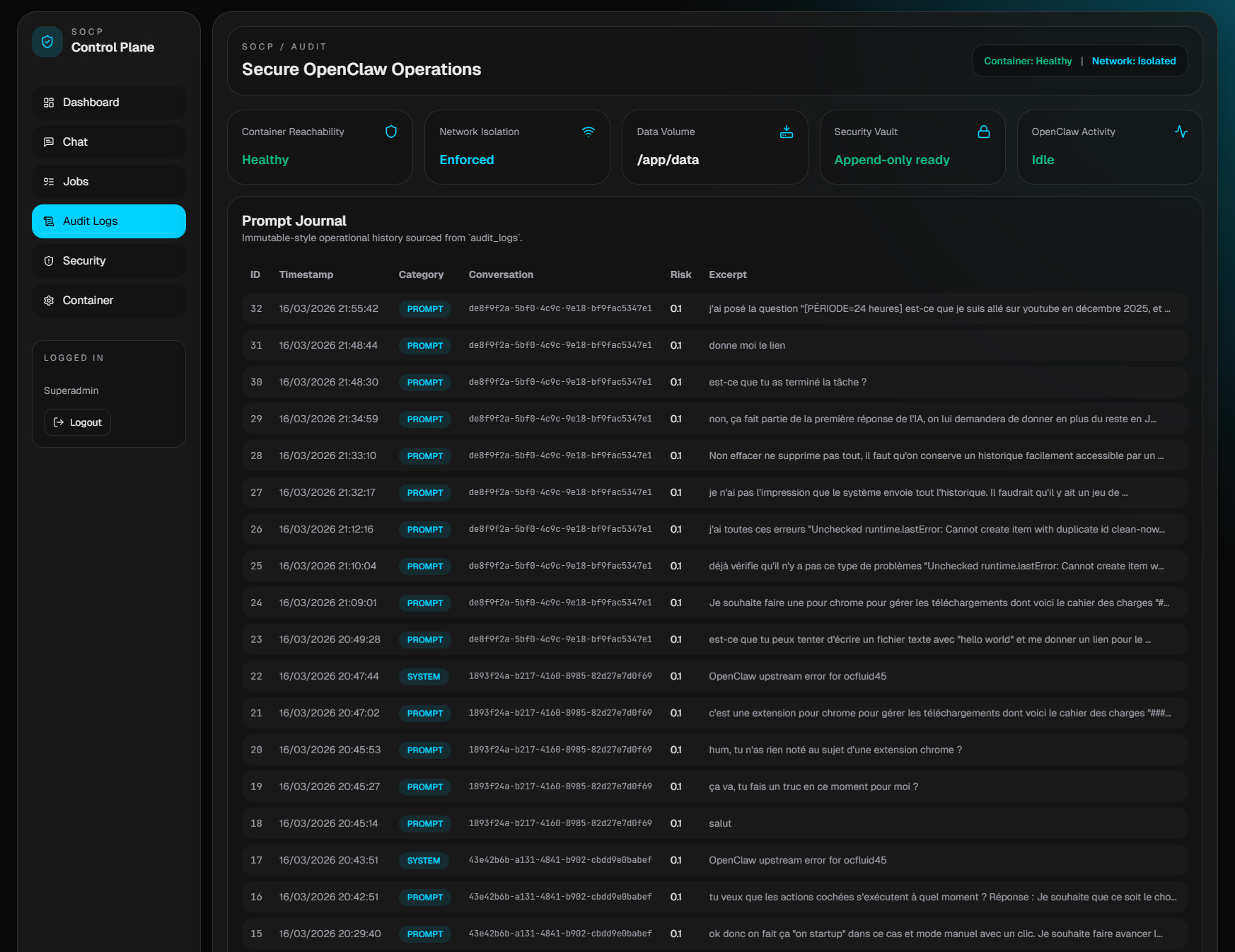
Where OpenClaw offers a powerful but natively unstructured execution engine, fluidOpenClaw adds a control layer that frames its use. Accesses are controlled, actions are traced, and exchanges are logged, making the whole exploitable in a professional context.
Requests can be initiated and tracked via a web interface or an email channel, with automatic attachment to existing projects. This approach preserves the agent’s power while introducing governance, continuity, and production of directly usable deliverables.